
Commercial tenant abandoned property California issues arise frequently when a church tenant vacates the premises—whether at the end of the rental term or unexpectedly—and leaves items behind. In many cases, these belongings are simply forgotten and later retrieved once the tenant is notified. However, it is also common for a commercial tenant to intentionally leave property behind because they no longer want it or do not wish to move it.
This raises an important legal question for churches and landlords: what obligations apply when a commercial tenant abandoned property California law governs? California imposes specific notice, storage, and disposal requirements, and failing to follow them can expose the property owner to liability.
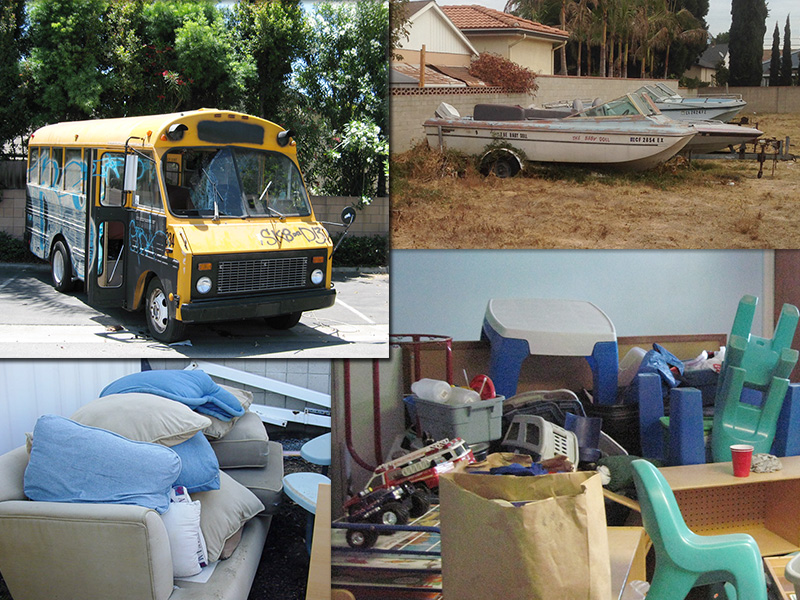
Personal Property:
Under commercial tenant abandoned property California rules, personal property is defined as any property that is not real property. The California Civil Code explains that personal property includes “every kind of property that is not real.” This naturally raises the question: what, then, qualifies as real property?
Real property, as defined by California Civil Code §658, includes:
- Land
- Anything affixed to land
- Anything incidental or appurtenant to land
- Anything immovable by law
For purposes of sale, emblements, industrial growing crops, and items attached to or forming part of the land that are agreed to be severed before sale are treated as goods and governed by the rules applicable to the sale of goods.
In practical terms, personal property consists of movable, tangible items that are not affixed to the land. An item is considered affixed when it is attached by roots (such as trees, vines, or shrubs); embedded in the land (such as walls); permanently resting upon it (such as buildings); or permanently attached to something permanent by cement, plaster, nails, bolts, or screws. Items intended to be severed before sale are treated as goods rather than real property under commercial tenant abandoned property California standards.e, certain crops and items intended to be severed before sale are treated as goods rather than real property.
Handling Abandoned Personal Property After a Tenant Vacates:
When dealing with commercial tenant abandoned property California situations, the first step after a tenant vacates is to attempt to contact the former tenant and inform them that personal property was left behind. In some cases, the tenant may confirm in writing that they no longer want the items and authorize the church to retain or dispose of them. The challenge arises when the tenant cannot be reached.
Under California law, once the rental agreement has been terminated and the tenant has actually vacated the premises, any remaining items are generally considered abandoned based on a reasonable belief. California defines a “reasonable belief” of abandonment as the knowledge or belief a prudent person would have without conducting an investigation, unless the landlord has specific information suggesting that an investigation would likely reveal relevant facts and the cost of that investigation is reasonable in relation to the value of the property.
Once it is determined that the tenant has abandoned their personal property, the landlord must inventory the items and store them safely in a secure and reasonable location. After storage, the landlord must provide proper statutory notice to the former tenant. This notice must strictly comply with commercial tenant abandoned property California requirements set forth in the applicable statutes.
Notice:
If the tenant does not claim their personal property, you must inform the tenant of your intent to dispose of it so as to avoid being accused of theft or conversion. If you have reason to believe that the tenant is not the owner of the property and you know who the owner is, then you must also send a notice to the actual owner of the property, in addition to the tenant.
Notice to the tenant is strictly governed by California Civil Code §1993 et. seq. which states in part that the notice shall be personally delivered to the former tenant by first-class mail, postage prepaid, at their last known address. If there is reason to believe that the notice sent to that address will not be received by that person, also to any other address known to the landlord where the person may reasonably be expected to receive the notice. If the notice is sent by mail to the former tenant, one copy shall be sent to the premises vacated by the tenant.
That notice shall describe the property in a manner reasonably adequate to permit the owner of the property to identify it and shall advise the person to be notified that reasonable costs of storage may be charged before the property is returned, where the property may be claimed, and the date before which the claim must be made.
Additionally, the law requires that specific deadlines be adhered to and language be used in the notice so as to prevent the previous tenant from claiming that the personal property was improperly disposed of.
Disposal:
At any point if time prior to the expiration of the deadlines prescribed by law, the property owner may release the personal property to the former tenant or their agent and is not obligated to determine who the lawful owner.
Where the property is not released to a former tenant and the total resale value of the property is less than the lesser of either $750 or $1 per square foot of the premises occupied by the former tenant, the landlord may retain the property for his or her own use or dispose of it in any manner. Otherwise, the property shall be sold at public sale by competitive bidding.
California law sets forth the requirements for the disposal of abandoned personal property after notice of the sale has been given by publication wherein the church has the right to both bid on the items and deduct the cost of storage, advertising, and sale. After the deduction of those cost, any balance of the proceeds of the sale that is not claimed by the former tenant be paid into the treasury of the county in which the sale took.
Conclusion:
To avoid being accused of theft or destruction of such personal property, properly store it and contact an attorney for legal advice, including its legal storage. Don’t just throw it away. To avoid potential liability, it is important for the landlord to properly assess the value. When the value is not known, a landlord can request an estimate of value from a knowledgeable person.
Please see our other related articles
Church Officer and Director Liability
Why Use Bushore Real Estate
Disclaimer: Every situation is different and particular facts may vary thereby changing or altering a possible course of action or conclusion. The information contained herein is intended to be general in nature as laws vary between federal, state, counties, and municipalities and therefore may not apply to any given matter. This information is not intended to be legal advice or relied upon as a legal opinion, course of action, accounting, tax or other professional service. You should consult the proper legal or professional advisor knowledgeable in the area that pertains to your particular situation.
