
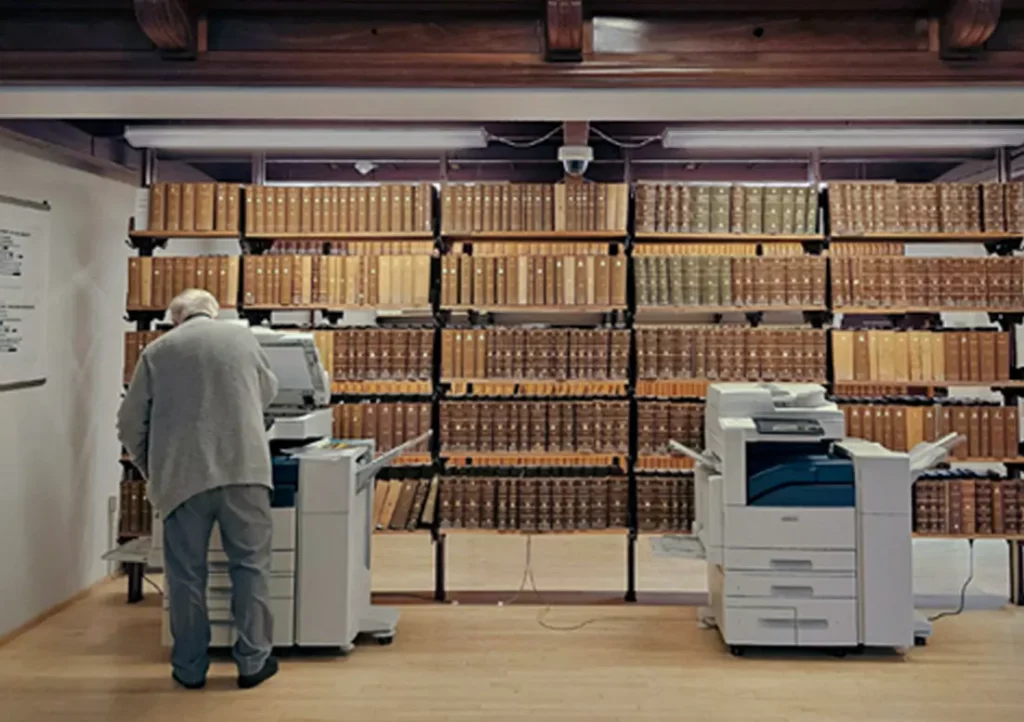
Copier agreements for churches carry long‑term financial and legal obligations that many ministries don’t fully consider before signing. For many churches, a copier or multifunction printer is as essential as the pulpit. Bulletins, financial reports, children’s ministry materials, sermon notes, and community outreach flyers all depend on it.
The real challenge is that most churches don’t think about the end when they sign the agreement. They’re focused on ministry needs, not legal obligations. Yet copier contracts are written with the assumption that the customer will remain in business for the full term. When that isn’t the case, the fine print becomes very real, very quickly
Lease, Finance, or Purchase
Each type of copier agreement has its own advantages and drawbacks—but the differences become especially important when a church closes, merges, relocates, or downsizes. Copier agreements are legally binding contracts, and the way they unwind can dramatically affect the church’s finances during an already difficult transition.
Below is a practical, candid breakdown of the good and bad of each approach, with a special focus on what happens when the church must return the machine
Leasing
Leasing is by far the most common path churches take. It’s easy, predictable, and requires little upfront cost. A lease allows a church to enjoy a modern machine with manageable monthly payments, and it often bundles in service and supplies. On the surface, it feels like the simplest option. But the simplicity fades when the church closes its doors. A lease doesn’t end just because the ministry does. The leasing company still expects the remaining payments, and they expect the machine back—usually at the church’s expense. This is one of the most common church copier lease risks, especially when a congregation is dissolving or merging.
That means arranging shipping, covering insurance, and ensuring the copier is returned in acceptable condition. If it’s damaged, excessively worn, or missing components, additional fees can follow. Many churches are surprised to learn that even in dissolution, the lease remains a binding contract that must be satisfied before the entity can legally wind down.
Financing
Financing, one of the more overlooked copier agreements for churches, looks similar to leasing at first glance—monthly payments, predictable terms, and a newer machine. But the key difference is ownership. When a church finances a copier, it’s working toward owning the equipment outright. That ownership becomes especially important if the church closes. Instead of returning the machine, the church already holds title to the copier and simply pays off the remaining balance to clear the lien. It can be sold, donated, or used to recover funds during the dissolution process. While financing still requires settling the debt, it avoids the logistical and financial complications of returning equipment to a leasing warehouse.
Purchasing
Purchasing a copier outright is the cleanest option, though often the least chosen. It requires more cash upfront, and churches understandably prefer to preserve liquidity. But ownership brings clarity. There are no contracts to unwind, no return instructions to follow, and no surprise invoices. If the church closes, the copier becomes just another asset—something that can be sold or given away without any entanglements. For congregations with uncertain futures or those navigating aging membership, outright purchase is often the most stable long‑term choice, even if it feels more expensive at the beginning.
Returns
The most important question a church can ask before signing anything is simple: What happens if we need to return this copier? The answer varies dramatically depending on whether the church leases, finances, or purchases. A lease can become a burden during closure. Return obligations are often the most expensive part of copier agreements for churches, especially when shipping, insurance, and condition requirements apply. A financed copier becomes a debt that must be settled. A purchased copier becomes an asset that can help the church through its sale or gift to another church.
Note
Understanding the long-term implications of copier agreements—especially in the context of closure—can save a church from unnecessary stress and expense. If your church is closing or dissolving, the IRS outlines the required steps for winding down a tax-exempt organization, including how remaining assets must be handled.
Please see our other related articles
Church Officer and Director Liability
Selling Church Property
Why Use Bushore Real Estate
Disclaimer: Every situation is different and particular facts may vary thereby changing or altering a possible course of action or conclusion. The information contained herein is intended to be general in nature as laws vary between federal, state, counties, and municipalities and therefore may not apply to any given matter. This information is not intended to be legal advice or relied upon as a legal opinion, course of action, accounting, tax, or other professional services. You should consult the proper legal or professional advisor knowledgeable in the area that pertains to your particular situation.
